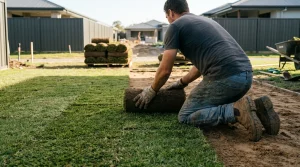
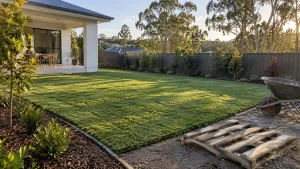
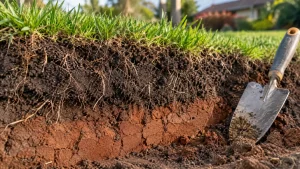
No, you shouldn't lay new turf over existing grass. Here's why it fails in Queensland, four ways to remove an old lawn, and the right order from stripping to laying.
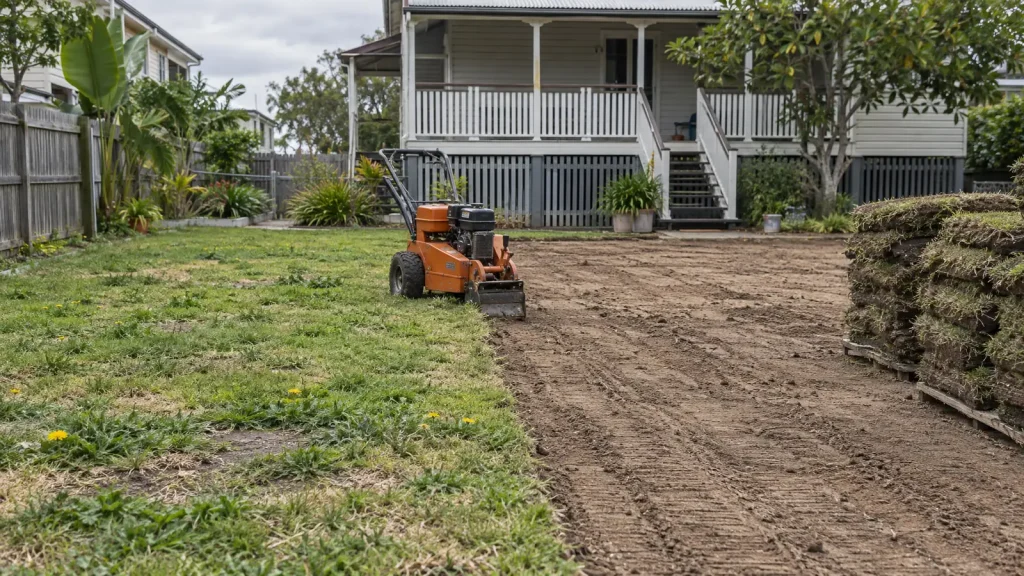
Can you lay turf over existing grass? No. The old lawn dies and rots underneath, leaving air pockets, soft spots and sinking, and in South East Queensland couch and kikuyu runners grow straight back through. Strip the old lawn, add 100–150 mm of good underlay soil, level it, then lay fresh turf.
| Your situation | What to do |
|---|---|
| Replacing the whole lawn (new variety, tired or weedy lawn) | Remove the old grass and its runners completely, then prepare the soil and lay |
| Old lawn is couch or kikuyu and you’re laying buffalo or zoysia | Kill and remove it thoroughly first, or it will invade the new turf |
| Lawn is mostly weeds | Treat and remove the weeds, then prepare the soil; never turf over them |
| A few bare or dead patches in a healthy lawn | Cut the damaged area back to soil and patch with matching turf |
| Healthy lawn that’s just thin or bumpy | Top-dress rather than re-turf |
| Underlay depth before laying | 100–150 mm of quality under-turf soil |
| When to lay after delivery | Ideally within 24 hours of harvest |
Stripping a lawn is hard work, so laying straight over it looks like a shortcut. We’ve grown turf at Woodford since 1994, and for a full re-turf our answer is still no. Here’s why.
New turf needs firm contact with loose soil. Laid over an existing lawn, it sits on a cushion of leaves and thatch, so its roots grow into that layer instead, dry out fast in Queensland sun and never anchor properly.
Cut off from light, the grass underneath dies and decomposes unevenly, leaving air pockets, soft spots and dips. A lawn that looked flat on day one turns lumpy, with low spots where water sits.
Much of the “just lay over it” advice online comes from cooler climates. SEQ lawns are mostly warm-season runner grasses: couch and kikuyu spread by stolons above ground and rhizomes below, and new turf won’t stop them. They push up through the joins, leaving a buffalo or zoysia lawn with a patchwork of two grasses that’s very hard to fix. Weeds with deep roots or tubers do the same. If kikuyu is the grass you are replacing, kikuyu vs buffalo compares it with a soft-leaf buffalo.
If most of your lawn is healthy with a few dead patches, cut those areas back to bare soil, loosen and level them, and patch with the same variety. If the lawn is healthy but thin or uneven, top-dress instead.
There are four practical ways to remove an old lawn. The right one depends on the area, the grass and how much time you have.
| Method | Best for | Time | Effort | Area | Waste to deal with |
|---|---|---|---|---|---|
| By hand (spade or mattock) | Small areas, edges, tight access | Slow | High | Small patches and strips | Sods plus soil |
| Hired turf cutter | Open, fairly level lawns | Fast once set up | Medium to high (heavy machine) | Medium to large | Neat rolls of sod plus soil |
| Spray, then strip | Couch, kikuyu and weedy lawns | Slowest (waiting on the herbicide) | Medium | Any | Dead sods plus soil |
| Installer strips it | Larger lawns, clay sites, busy people | Usually done as part of the install | None for you | Any | Handled by the crew |
A sharp flat spade or mattock works for small areas. Cut the lawn into squares, slide the spade under each one just below the root zone, and lift it out. Take the runners with it: any couch or kikuyu stolons you leave behind will regrow. In dry Brisbane clay, water lightly the day before.
A turf cutter slices under the lawn with a vibrating blade and lifts it in strips you can roll up. Most hire machines have an adjustable depth: set it just deep enough to take the crown and the main root and runner layer, and check the range with the hire company.
For couch, kikuyu or a weedy lawn, kill the grass before removing it. Use a non-selective herbicide registered for the job and follow the label exactly, including how long to wait before disturbing the soil or replanting. Runner grasses often need a follow-up application. Once it’s dead, strip it as above.
Professional turf installation covers removing the old grass, weeds and debris, then levelling and conditioning the soil before the new turf goes down. No cutter hire, no tip runs. For a whole property, our front and backyard turf packages bundle site assessment, turf selection, delivery and installation.
Rather skip the turf cutter and the tip run? Tell us about your site and we’ll recommend the best way to get the old lawn out and fresh-cut turf from our Woodford farm down. Ask us for a free quote.
Warm-season grasses root fastest when they’re actively growing, so spring through to early autumn is the easiest time to re-turf in SEQ. It can be laid in the cooler months too, but roots more slowly. Plan around the wet season: waterlogged clay is hard to strip and level, so aim for a few dry days.
DIY makes sense for a small, flat, easy-access lawn with no couch or kikuyu to fight, when you have the time and a way to get rid of the waste.
A professional strip-and-lay is worth pricing for larger lawns, heavy clay, sloping or awkward blocks, stubborn runner grasses, or when you need the job done in a day or two. Every site is different, so we price re-turfing once we know the area, access and soil. For what drives the price, see turf installation cost in Brisbane. Our front and backyard packages cover the whole job, from site assessment to installation.
It isn’t recommended anywhere, and especially not in Queensland. The old grass rots and sinks under the new turf, the new roots don’t reach the soil, and warm-season runner grasses like couch and kikuyu grow back through.
Not if you want the lawn to last. It may look fine for a few weeks, but it usually turns lumpy and patchy as the old grass rots or grows back through.
Yes, for a full re-turf. Take out the grass and its runners, then prepare the soil. The only exception is patching small dead areas in an otherwise healthy lawn.
No. Laying Sir Walter buffalo over couch or kikuyu is one of the worst combinations, because the runner grass grows up through the buffalo and is very hard to remove afterwards.
No. Weeds with runners, deep roots or tubers, such as nutgrass, will come through the new turf. Treat them according to the product label, remove them, and prepare the soil before laying.
For small areas, a sharp spade. For larger, flat lawns, a hired turf cutter. For couch, kikuyu or weeds, spray first and then strip. Easiest of all: have an installer do it.
It depends on the machine, as most hire cutters have an adjustable blade. Set it just deep enough to lift the runners and main roots, and ask the hire company for its depth range.
For open, fairly level lawns, yes. On slopes, rough ground or around tree roots, a spade or an installer is often the better option.
Yes. After removing the old lawn, spread 100–150 mm of quality under-turf soil, level it, and apply a starter fertiliser before laying the turf.
Not long, because it’s a living plant. Ideally lay it within 24 hours of harvest, so have the old lawn removed and the soil ready before delivery day. Keep any unlaid rolls shaded and lightly watered.
It depends on the area, the turf variety, how much removal and soil preparation is needed, and site access. Turf starts at $7.00/m² for Wintergreen couch and $15.50/m² for Sir Walter buffalo or Empire Zoysia. Removal, soil and labour are extra, so ask for a free quote for your site.
If you’re doing it yourself, start with the turf calculator to work out how much turf you need, then order fresh-cut turf for the day your ground is ready. To hand over the stripping, prep and laying, request a free quote and we’ll talk you through it. We supply Brisbane and the Sunshine Coast from our farm at Woodford.
Ready to order turf?
Fresh-cut turf from our Woodford farm, delivered across Brisbane and the Sunshine Coast. Work out your area and price in the turf calculator.
More in Laying Turf

Copyright ©2026 Hancey's Turf - Designed by Smart Local