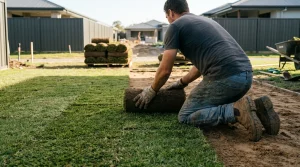
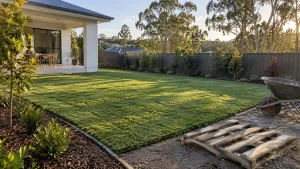
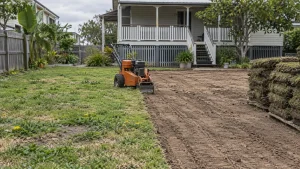
The best time to lay turf in South East Queensland is spring or early autumn, but you can lay it in any month. A month-by-month guide using BoM averages for Brisbane and the Sunshine Coast, with winter and summer tips.
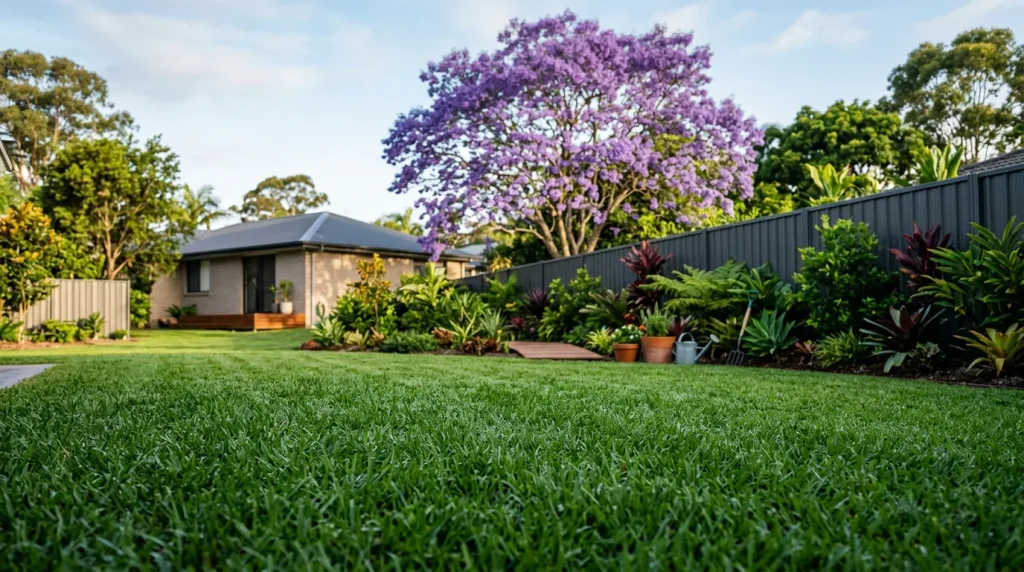
The best time to lay turf in South East Queensland is September, October or April, when the soil is warm and rooting is fast without peak summer heat. March and November are close behind. But you can lay turf in any month here: summer works with heavy watering, and winter works with less water and slower rooting.
Temperatures and rainfall are Bureau of Meteorology averages for Brisbane (station 040913, 1999–2026) and Sunshine Coast Airport, formerly Maroochydore Airport (station 040861, 1994–2026). Ratings and watering are our guide for new turf.
| Month | Brisbane max / min · rain | Sunshine Coast max / min · rain | Rating | Watering | Tip |
|---|---|---|---|---|---|
| January | 30.4 / 21.7 °C · 140 mm | 29.1 / 21.3 °C · 153 mm | Good | High | Lay early in the day and water each section as it goes down. |
| February | 30.2 / 21.5 °C · 176 mm | 28.9 / 21.4 °C · 218 mm | Fair to good | High, less after rain | Wettest month. Wait for soggy soil to drain before laying. |
| March | 29.2 / 20.3 °C · 149 mm | 28.0 / 20.3 °C · 188 mm | Very good | Moderate to high | Still wet on the coast. Check drainage before the turf arrives. |
| April | 27.2 / 17.4 °C · 64 mm | 26.1 / 17.1 °C · 147 mm | Ideal | Moderate | Last warm month. Turf laid now roots before winter. |
| May | 24.5 / 13.9 °C · 69 mm | 23.6 / 13.8 °C · 165 mm | Good | Low to moderate | Rooting slows as nights cool. Cut back watering. |
| June | 22.1 / 11.8 °C · 56 mm | 21.5 / 11.2 °C · 105 mm | Fair to good | Low | Water in the morning so turf isn’t wet overnight. |
| July | 22.0 / 10.5 °C · 31 mm | 21.2 / 9.7 °C · 71 mm | Fair to good | Low | Coolest month. Overwatering is the bigger risk than drying out. |
| August | 23.5 / 11.1 °C · 34 mm | 22.3 / 10.1 °C · 70 mm | Good | Low to moderate | Dry and warming. Turf laid now takes off in spring. |
| September | 25.7 / 13.9 °C · 29 mm | 24.4 / 13.0 °C · 51 mm | Ideal | Moderate | Driest month, so don’t rely on rain. Water on schedule. |
| October | 27.2 / 16.6 °C · 87 mm | 25.8 / 15.8 °C · 90 mm | Ideal | Moderate | Storm season starts. Hold off laying the day after a downpour. |
| November | 28.4 / 18.9 °C · 102 mm | 27.3 / 18.0 °C · 88 mm | Very good | Moderate to high | Watch hot, windy days. Water edges next to paths first. |
| December | 29.7 / 20.6 °C · 138 mm | 28.4 / 19.9 °C · 152 mm | Good | High | Book early around the holidays and plan watering if you’ll be away. |
Laying this month? Work out how many square metres you need and what it costs with the turf calculator, then follow our guide on how to lay turf.
If you’re asking about the best time to lay turf in Brisbane or on the Sunshine Coast, there’s no bad month, only months that need different care. The warm-season grasses we grow at Woodford (Sir Walter buffalo, Empire Zoysia and Wintergreen couch) root fastest when the soil is warm and the days are mild. That’s why September, October and April get top marks. Summer brings the fastest growth but the highest water bill and the most risk of turf drying out. Winter is slower, but newly laid turf needs far less water and rarely scorches.
So the best time of year to lay turf is spring or early autumn, if you have the choice. If you don’t (a new-home handover, a sale, a renovation that has to finish), lay when you need to and adjust the watering to suit the season.
Much of the advice online is written for southern states, where cold winters stop warm-season grass almost completely and “don’t lay in winter” makes sense. South East Queensland is subtropical. Brisbane’s coolest month, July, still averages a 22 °C maximum and a 10.5 °C minimum, and the Sunshine Coast is similar. Warm-season turf slows down in those conditions but keeps rooting.
The exception is frost. Inland and hinterland areas, such as the Lockyer Valley and the ranges behind Brisbane and the Sunshine Coast, can get frost on clear, still winter nights, and low-lying pockets are colder than the averages suggest. Turf laid there in June or July will root more slowly, and couch can brown off after a frost. It usually recovers when the weather warms.
Yes. Laying turf in winter in Brisbane and on the Sunshine Coast works well, as long as you expect slower rooting and don’t overwater.
Winter-laid turf takes noticeably longer to root than turf laid in spring or summer, and longer again in shade or frost-prone spots. The leaf won’t grow much, so you may barely mow until spring. Some off-colour is normal for warm-season grass in winter and isn’t a sign it has failed.
Laying Sir Walter on the Sunshine Coast this winter? It’s a forgiving choice in the cool months. We cut turf to order at our Woodford farm and supply both the Sunshine Coast and Brisbane. Check prices and order on the turf calculator.
You can lay turf in summer in Queensland, and it roots quickly, but it’s the least forgiving season. A hot, windy afternoon can dry out new slabs within hours, so the job is all about water:
Our watering schedule for new turf gives the week-by-week amounts for summer and winter.
Both are excellent, and in SEQ there’s little between them. Spring has the edge for fast growth: the soil is warming and the lawn has a whole growing season ahead. The catch is that September is usually the driest month of the year, so you’ll be doing the watering, not the weather.
Early autumn (March and April) still has warm soil, cooler days and often some rain, which makes watering easier. Turf laid by April has time to root before winter. By late May, rooting slows, so treat it as winter laying.
| Variety | Best months to lay | Winter laying | Price |
|---|---|---|---|
| Sir Walter buffalo | September to April | Fine; allow extra rooting time, especially in shade | $15.50/m² |
| Empire Zoysia | Spring to autumn | Possible, but slow to establish in the cool months | $15.50/m² |
| Wintergreen couch | September to April | Fine in full sun; may lose colour after frost | $7.00/m² |
Sir Walter is a forgiving choice in any season. If you’re laying into a shady side yard in winter, expect it to take longer to knit down. Empire Zoysia establishes best from spring to autumn and grows slowly in winter, so a winter-laid Empire lawn needs patience. Wintergreen couch roots fast in warm weather and needs full sun. It slows right down in winter and can brown off after frost before greening up again in spring.
A well-prepared site in July will beat a rushed job in October. The two things that decide how fast turf roots in any season are:
Turf roots fastest in the warm months and noticeably slower in winter. Shade, soil and watering all change the timing, so check the turf rather than the calendar. Gently lift the corner of a slab: if it resists and you can see white roots going into the soil, it has rooted. Until then, keep walking to a minimum.
Our guide to when to mow new turf covers the first cut, and the starter care and maintenance plan sets out the first few months of care.
If you’re moving into a new build, the handover date usually decides the month, not the weather. That’s fine. Book the turf for as soon as the landscaping and soil are finished, and plan the watering around the season: daily attention in summer, much less in winter. If you’ll be moving boxes across the yard, lay a board path so you’re not walking on the new slabs.
Our front and backyard turf packages cover the whole lot, from site assessment to delivery and installation, so the lawn is done in one go.
In South East Queensland, September, October and April are ideal: warm soil for fast rooting without peak summer heat. March and November are close behind. Turf can still be laid successfully in any month.
Yes. SEQ winters are mild enough for warm-season turf to keep rooting, just more slowly than in spring or summer. It needs much less water than in summer, so avoid overwatering.
In SEQ there’s no month to avoid entirely. Be most careful in the hottest weeks of summer, when new turf dries out fast, and on frosty inland sites in mid-winter, where rooting is slowest. Never lay onto waterlogged soil.
Longer than in the warm months, and longer again in shade or frost-prone areas. Rather than counting days, lift a slab corner: if it resists and shows white roots, it has rooted.
Yes, and it roots quickly. Lay early in the day, water each section as it goes down and water two to three times a day in week 1. Don’t lay on soil that’s waterlogged after a storm.
Not long. Plan to lay it the same day it’s delivered, and within a few hours in hot weather. Rolled turf on a pallet heats up and deteriorates, so have the soil prepared before delivery and keep the rolls shaded until they go down.
Couch slows right down in cool weather and can lose colour, especially after frost. It greens up again as the weather warms in spring.
Whatever month you’re planning for, fresh turf and good soil prep matter more than the calendar. Use the turf calculator to price Sir Walter, Empire Zoysia or Wintergreen for your yard, or if you’d rather have it prepared and laid for you, ask for a free measure and quote for turf installation.
Ready to order turf?
Fresh-cut turf from our Woodford farm, delivered across Brisbane and the Sunshine Coast. Work out your area and price in the turf calculator.
More in Laying Turf

Copyright ©2026 Hancey's Turf - Designed by Smart Local