Mow Empire Zoysia at 25–50 mm, feed it once a year in spring and water deeply only when it needs it. Here's how to care for an established Empire lawn in Brisbane and the Sunshine Coast, from runners and seed heads to shade.
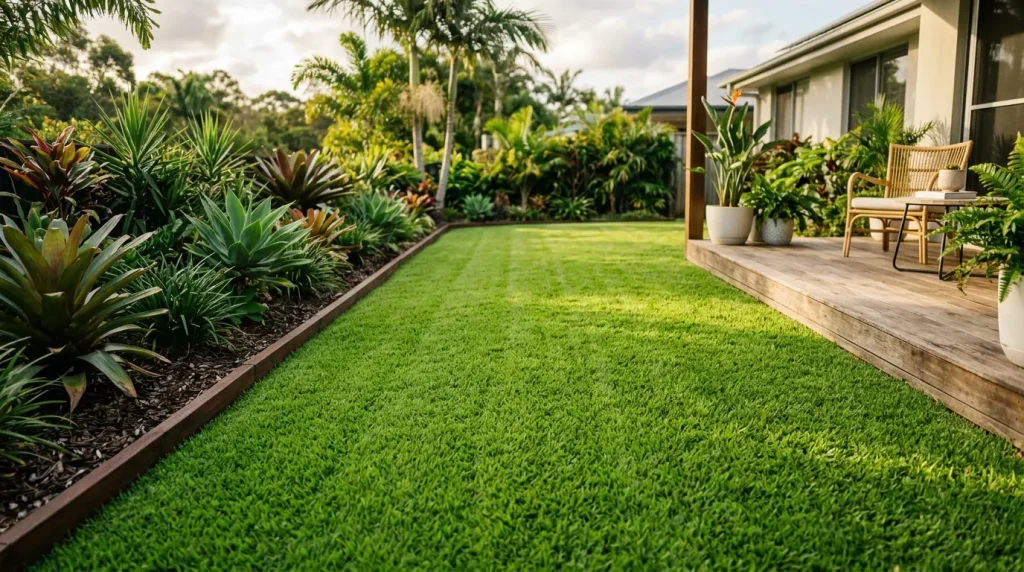
In South East Queensland, mow Empire Zoysia at 25–50 mm, using the higher end of that range in shade and going into winter. Feed it once a year in spring with a slow-release lawn fertiliser. Once established, water deeply and only when it needs it. It spreads by runners, but more slowly than couch. Purple seed heads in early spring are normal.
This Empire Zoysia care guide covers an established lawn. We grow Empire Zoysia on our farm at Woodford and deliver it across Brisbane and the Sunshine Coast. If your turf went down in the last six weeks, start with our new turf starter care plan and when to mow new turf, then come back here.
| Care item | Empire Zoysia in SEQ |
|---|---|
| Mowing height | 25–50 mm. Use the higher end in shade and from autumn through winter |
| How often to mow | When it has grown about a third above your chosen height. Regularly in the warm months, rarely in winter |
| Feeding | Once a year, in spring, with a slow-release lawn fertiliser. Don’t feed in winter |
| Watering once established | Deep soak only when the lawn shows stress. Its deep roots let it get by on rainfall much of the year |
| Shade | Medium (40–50%). Needs at least 4 hours of direct sun. See our shade guide |
| Wear and recovery | Tough and dense, with highly branching runners. Recovers well, but more slowly than couch |
| Seed heads | Purple, non-fertile seed heads in early spring are normal |
| Thatch | Low. Routine dethatching usually isn’t needed |
Empire’s recommended mowing height is 25–50 mm. Within that range, choose a height to suit the spot and the season:
Follow the one-third rule: never take off more than a third of the leaf in one mow, and bring an overgrown lawn down over two or three cuts. Empire grows more slowly than couch, so mow when it has grown, not by the calendar.
You may see “2–4 mows a year” quoted for Empire. That figure is for roadside and erosion-control work where the grass is left long. A home lawn kept at 25–50 mm needs mowing through the growing season.
A reel (cylinder) mower gives the cleanest finish on zoysia’s fine, dense leaf, especially at the lower end of the range. A rotary mower is fine at the middle to higher settings most home lawns use. Either way, keep the blade sharp, because blunt blades tear the leaf and leave grey tips.
Scalping, or cutting down into the brown runners and stems, does the most harm in late autumn, when there is no growing season left to recover. The lawn then sits thin until spring and lets winter weeds in. Keep the mower on a high setting from autumn.
Short clippings from regular mowing can be mulched back in, as Empire is a low-thatch grass. After a long gap between mows, catch them so clumps don’t smother the lawn.
Empire needs far less fertiliser than couch or kikuyu. The recommendation for the variety is one feed a year.
Avoid quick-release, high-nitrogen products in summer heat, as they can burn the leaf. Seaweed products such as Seasol are plant tonics rather than fertilisers, so they don’t replace the yearly feed. New turf waits until weeks 4–6 for a slow-release starter fertiliser, as in the starter care plan.
In humid weather, an orange, powdery rust on the leaf usually means the lawn is short of nutrients. It is mostly cosmetic, but check the lawn had its spring feed.
Empire’s deep root system means that, once established, it can largely survive on rainfall. In a normal SEQ summer the storms usually do the watering for you. The dry stretch from late winter into spring is when it’s most likely to need a drink.
New turf needs regular water for the first few weeks, so follow watering new turf. For dry-year planning, see drought-tolerant turf for Brisbane.
Yes, zoysia has runners. Empire’s runners are highly branching and it spreads quickly compared with other zoysias, which gives it good wear recovery. It is still slower than couch. Runners grow mainly from spring to autumn and slowly in winter, so a bare patch left going into winter usually stays bare until spring. The runners also creep into garden beds, so trim the edges in the growing season.
For patches bigger than a dinner plate, or anything you want fixed before winter, patch-returfing is quicker than waiting:
Our Empire Zoysia turf is $15.50/m². We cut it to order at Woodford, so a patch matches the lawn you already have from us.
In early spring, Empire sends up small purple seed heads. This is normal. They are non-fertile, so you can’t seed a lawn from them. Mow them off at your usual height, and don’t drop the mower to chase them.
Seed heads at other times of year usually mean the lawn is stressed, for example from dry soil, poor soil or low nutrients. Check your watering and feeding. Empire is sold as turf, not seed, and grass seed vs turf in Queensland explains why.
Empire has medium shade tolerance, around 40–50%. That is better than couch and kikuyu, but not as good as Sir Walter buffalo. Turf Queensland ranks buffalo first and zoysia second for shade. It advises at least 4 hours of direct sun, ideally between 10am and 2pm, and mowing a little higher in shade. Our shade-tolerant turf guide compares all three of our varieties.
A dense Empire lawn crowds out most weeds, which get in where it is thin, scalped or shaded. If you use a herbicide, check that the label lists zoysia as a safe turf, and follow its rate and temperature limits. Hand-weed turf under six weeks old.
Empire is less susceptible to lawn grubs, but not immune. Watch for patches that brown off suddenly from late spring to autumn, especially after storms. Our lawn armyworm guide explains how to confirm the pest, and grubs, diseases and weeds covers the other common problems.
They’re both zoysias, but they aren’t the same grass and they do different jobs. Empire is a variety of Zoysia japonica, grown as a lawn you mow, walk and play on. Zoysia tenuifolia is a different species, sold as Korean velvet grass or “no-mow” grass. It has a very fine leaf and, left unmown, grows into soft humps and mounds. It is mainly used as an ornamental groundcover, such as between pavers or in feature gardens, rather than as a family lawn.
The care in this guide is for Empire. We grow and supply Empire Zoysia. We don’t supply Zoysia tenuifolia.
| Season | Mowing | Feeding | Watering | Watch for |
|---|---|---|---|---|
| Spring (Sep–Nov) | Mow more often as it greens up. Mow off seed heads at your usual height | The yearly slow-release feed | Often the driest time, so deep soak when stressed | Seed heads (normal), early weeds |
| Summer (Dec–Feb) | Peak growth. Follow the one-third rule | None needed. Avoid quick-release nitrogen in the heat | Storms often do the job. Water early morning if dry | Armyworm and grubs, rust if the lawn is hungry |
| Autumn (Mar–May) | Move to the higher end of 25–50 mm. No scalping | None needed | Less often as it cools | Winter weeds starting |
| Winter (Jun–Aug) | Rarely. Keep it at the higher end | None | Only in a long dry spell | Some colour loss after frost, which comes back as it warms |
Empire is dormant in winter but holds its colour well. In frosty hinterland spots it may brown off after a frost, then regenerate once it starts growing again. For care across all our varieties, see the year-round lawn care plan and our seasonal turf care guide.
Between 25 and 50 mm. Use the higher end of that range in shade and from autumn through winter.
Mow when it has grown about a third above your chosen height. That’s regularly through the warm, wet months, and only occasionally in winter, when Empire barely grows. It needs far less mowing than couch.
Once a year, in spring once the lawn is growing again, using a slow-release lawn fertiliser at the label rate. Don’t feed in winter. On new turf, wait until weeks 4–6.
Yes. Empire’s runners are highly branching, so it repairs itself. It spreads more slowly than couch, and mostly in the warm months.
Empire produces purple, non-fertile seed heads in early spring, which is normal. Mow them off at your usual height. Seed heads at other times usually point to stress, such as dry soil or low nutrients.
No. Empire is a zoysia (Zoysia japonica). Soft-leaf buffalo such as Sir Walter is a different grass (Stenotaphrum secundatum). Our Empire Zoysia vs Sir Walter buffalo guide compares the two.
No. Zoysia tenuifolia, also called Korean velvet or “no-mow” grass, is a different species that grows into soft mounds and is used mostly as an ornamental groundcover. Empire is a lawn grass that you mow. We grow Empire, not tenuifolia.
It is slower than couch to establish and to recover from wear, so bare patches take longer to fill in. It also needs more sun than Sir Walter buffalo. In return, it needs less mowing, water and fertiliser.
In the warmer months, Empire is usually rooted enough for its first mow at about 2–3 weeks. In winter it can take 4–6 weeks or more. Our guides to when to mow new turf and watering new turf cover the first weeks.
If you’re patching or extending an Empire lawn, the turf calculator works out the square metres you need. Empire Zoysia is $15.50/m², cut fresh at Woodford and delivered across Brisbane and the Sunshine Coast. If you’d rather someone else looked after it, our Brisbane lawn care services can help.
Still deciding whether zoysia suits your yard? Compare Empire Zoysia and Sir Walter, and check how much sun you get with our shade-tolerant turf guide.
Ready to order turf?
Fresh-cut turf from our Woodford farm, delivered across Brisbane and the Sunshine Coast. Work out your area and price in the turf calculator.
More in New Lawn Care

Copyright ©2026 Hancey's Turf - Designed by Smart Local